
ABOUT US
We provide academic leadership for research and policy related to environmental and animal protection—with special focus on agriculture and conservation.
OUR APPROACH
We advance understanding of environmental and animal protection in three key ways:
- Research: We conduct and support research in the humanities, social sciences, and natural sciences.
- Outreach: We engage with decision-makers through direct consultation and public communication.
- Field-building: Through our Food Impact Program, we host events and support early-career researchers.
FEATURED RESEARCH
Navigating Trade-Offs Between Climate Change Mitigation and Biodiversity Conservation
Synergies between mitigating climate change and conserving biodiversity are often emphasized in public discourse and policy, as both goals are seen as mutually reinforcing. However, there can be trade-offs between these aims, particularly when actions benefiting one may inadvertently harm the other. Where such trade-offs are evident, cost-benefit analysis (CBA) has emerged as a dominant approach to resolving them. While CBA can be useful, it also has limitations, especially in addressing ethical and ecological complexities. We highlight these limitations and propose that creating environmental ethics committees using principles of collaborative governance would provide a practical, transparent mechanism for grappling with trade-offs at various levels.
Designing a “Made in America” Meat Tax
Agriculture is the fourth largest source of greenhouse gas (GHG) emissions in the United States, yet regulators have paid far less attention to emissions from agriculture than from transportation and electricity. This article seeks to put the idea of a meat tax on the agenda as a tool for reducing GHG emissions from agriculture. Drawing on scholarship from other jurisdictions, it identifies key issues that need to be addressed to design a meat tax for the United States. It also recommends an iterative modelling process to devise an equitable meat tax, showing how a well-designed meat tax could be one tool in a basket of policy measures designed to reduce emissions from agriculture with benefits for humans, animals, and the environment.
Climate Change, Public Health, and Animal Welfare: Towards a One Health Approach to Reducing Animal Agriculture’s Climate Footprint
This article argues that efforts to address the climate effects of animal agriculture must account for animal welfare and public health effects as well. Applying a One Health lens, it evaluates three strategies: “sustainable intensification” (keeping or boosting production while limiting emissions), “species shift” (choosing animals with lower emissions footprints), and “systemic dietary change” (moving toward plant- based or other alternatives). It highlights that intensification and species shift can introduce new risks for animals and public health, while systemic dietary changes offer promise — provided that all populations can access adequate nutrition. CEAP contributed to this project via our director Jeff Sebo, and our colleague Matthew Hayek participated as well.
The ‘Sustainability Gap’ of U.S. Broiler Chicken Production: Trade-offs Between Welfare, Land Use and Consumption
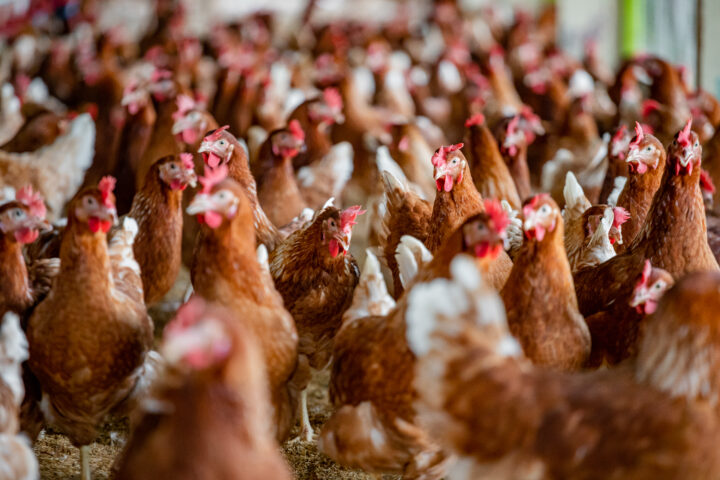
In 2018, over nine billion chickens were slaughtered in the United States. There is interest in raising chickens on pasture and switching to slower-growing, higher-welfare breeds. We investigate the consequences of shifting to slower-growing broiler chickens in the U.S. Maintaining present-day chicken meat production with a slower-growing breed would require a 44.6%–86.8% larger population of chickens, a 19.2%–27.2% higher annual slaughter rate, and an increase of 19.9–30.6% of land used in chicken production. Without reduction in consumption, switching to alternative breeds will lead to an increase in the number of individuals killed each year, an increase in land use, and a possible decrease in aggregate chicken welfare.
Protect Global Values of the Southern Ocean Ecosystem
The Southern Ocean, which comprises ∼10% of the global ocean, is critically important to the homeostasis of the Earth system, exhibits distinctive marine biodiversity, and has tremendous scientific, diplomatic, and wilderness value. Yet, the region and its suite of global values are critically threatened by climate change, which is exacerbated by commercial fishing. The Commission for the Conservation of Antarctic Marine Living Resources (CCAMLR) meets in October–November 2022 and is under pressure to strengthen fisheries management, especially toward climate change resilience. We encourage improved management practices that account for the environmental externalities arising from trade-offs between fishing and the global contribution of the Southern Ocean ecosystem, including under a changing climate.
Towards Plant-Forward Diets: A Toolkit for Local Policymakers
This report highlights the legal authority that local governments have to reduce meat consumption and presents options for cities to encourage a transition towards plant-forward diets. Dale Jamieson, CEAP Founding Director, moderated the launch event, which included Rachel Atcheson (Assistant to the President, Office of the Brooklyn Borough President, Eric L. Adams), Nilang Gor (Founder, Cultivate Empathy for All, Senior Scientist, Process Development, Catalyst Biosciences), Danielle Spiegel-Feld (Executive Director of the Guarini Center and Adjunct Professor, NYU Law School), Chloe Waterman (Senior Program Manager, Climate-Friendly Food Program, Friends of the Earth), and Dan Zarrilli (Special Advisor, Climate & Sustainability, Columbia University). The report has been widely distributed, including to incumbent and newly-elected New York City Council members.
This report was prepared by CEAP and the Guarini Center of the NYU Law School, with support from the Brooks Institute for Animal Law and Policy.
FEATURED MEDIA
The Case for a Global Ban on Industrial Animal Agriculture by 2050

The Many Faces of Science in the Animal Protection Movement

Why a Supreme Court Case about Pig Farming Matters So Much
SDGs: Lack of Animal Health Integration Threatens Public Health
China’s Rare Golden Monkeys Debut at European Zoos, a Possible Successor to ‘Panda Diplomacy’

Regenerative Agriculture is Sold as a Climate Solution. Can it Do All it Says?

Raising Slower Growing Chickens Could Reduce Their Suffering for a Lower Cost Than You Might Think

Wild Animals As Stakeholders In The Policymaking Process

NGOs Worldwide Unite to Stop Octopus Farming




FEATURED OPPORTUNITIES
CEAP conducts and supports research about environmental and animal protection that can be useful for practitioners and policymakers. You can find information about how to submit a proposal—along with information about any other relevant opportuniites—on our opportunities page.